1 June 2026 09:00 – 3 June 2026 16:00
Congress Center Parkhotel Plzeň
HOT FORMING OF HIGH-PERFORMANCE MATERIALS – A KEY TECHNOLOGY FOR SUSTAINABLE DEVELOPMENT
The utilization of high-performance materials is not only driven by technological requirements but is also a necessity to meet the increasing environmental demands. The automotive sector has been at the forefront of innovation and traditionally led the development of lightweight solutions. By integrating high-strength steels and advanced forming processes, carmakers have achieved significantly enhanced vehicle crashworthiness while simultaneously reducing weight. The transport sector faces new challenges linked to the rise of electromobility and the need for sustainable materials use. High strength materials, particularly steel, are the materials of choice to address these challenges in an affordable way. Producing components from these advanced materials presents its own set of challenges, and thermo-mechanical forming processes offer a favorable solution.
Hot forming, a pivotal technology, enables the creation of components with complex shapes and the desired high-performance properties such as strength and toughness. Beyond the well-established press hardening of boron steels, the market now includes advanced techniques such as light alloys forming, tailoring mechanical properties within the same component, hybrid metal-composite materials and the possibility to manufacture large parts. In addition to all these innovations incorporated in the last years, the forming processes have now to also include solutions to meet and contribute to the global sustainability goals. Hot forming of high strength steels has shown to offer better LCA results than other forming processes. Therefore, aimed at maintaining this advantage and to improve environmental impact, the sector needs to focus on enhancing the efficiency of heating technology, minimizing scrap and allowing the application of new steel grades with lower CO2 footprint.

CONFERENCE SERIES AND SCOPE
Since its inception in 2008, the biannual CHS2 conference series has become the premier platform for scientific exchange in hot forming technologies. After nine successful conferences, CHS2 has established itself as the leading forum for industry experts and researchers. The journey began in Kassel, Germany, and has since traveled to Luleå, Sweden; Toronto, Canada; Atlanta, Georgia, USA; Barcelona, Spain; and most recently, Nashville, Tennessee, USA in 2024. As we look forward to the tenth CHS2 conference in Plzeň, Czech Republic, we continue to expand the scope of topics, reflecting the dynamic advancements in the field. Each edition introduces new themes, ensuring CHS2 remains at the forefront of innovation and knowledge sharing.

VENUE
For the first time, the CHS² conference will be held in in Plzeň, Czech Republic at the Congress Center Parkhotel Plzeň. This conference will be organized in cooperation with COMTES FHT a.s., with its headquarters in Dobřany near Plzeň, a leading European research organization specializing in the development of forming and heat treatment processes, materials research, and technology transfer.
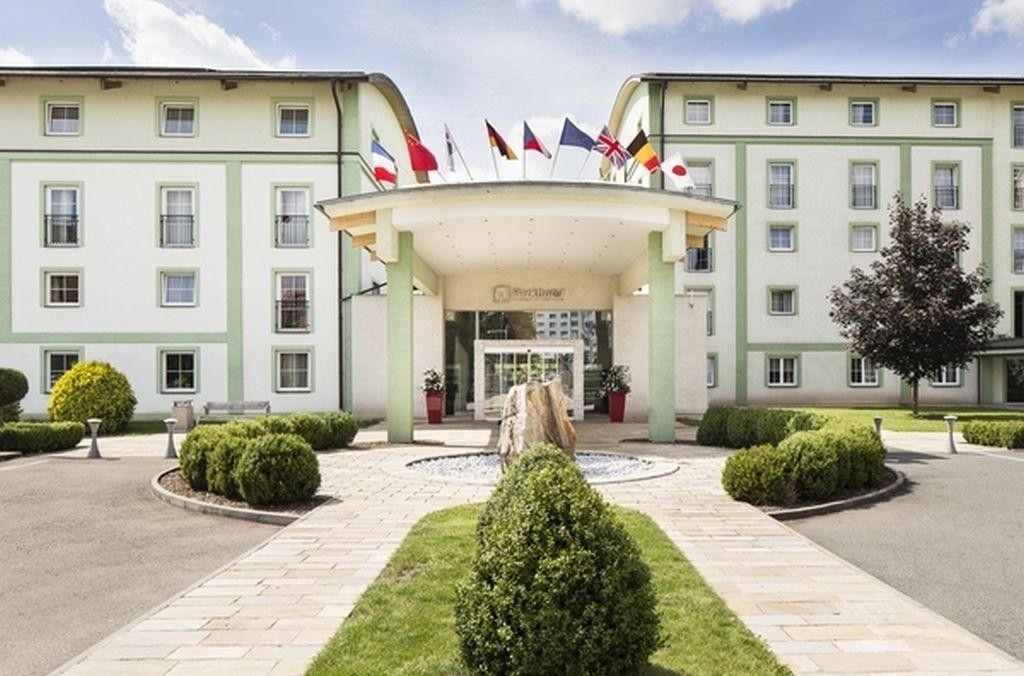
PARKHOTEL AND CONGRESS CENTER PILSEN
U Borskeho Parku 31
301 00 Pilsen, Czech Republic
Basic information
If you come to Pilsen, you will find a city that has a lot to offer to its visitors. Besides the well-known Pilsner Urquell brewery, you will find plenty of tourist attractions in Pilsen. You can check out the main square with the St. Bartholomeus cathedral, the Great Synagogue, located close to the main square, which is the second largest one in Europe or the Historic Underground.
How to get to the event
We recommend booking your flights to the Praque airport.
From the airport, there is a bus "AE" to the Praha Hlavní nádraží, where you can take a train to Pilsen.
You can also rent a car through various rental services or order Uber or Bolt taxi.
Parking
Parking is avaliable at the conference venue.
Advancing Structural Performance Across the Press Hardening Value Chain
Within the framework of the CHS 2 conference, two specialised seminars are organised addressing crashworthiness and fatigue performance, two key and complementary requirements governing the structural integrity of press hardened components.
Press hardening has enabled significant lightweight potential and high strength levels in safety critical automotive structures. However, fully exploiting these advantages requires going beyond forming and microstructure control, and addressing how materials, processes, part design, surface condition and defects interact to determine performance under impact loading and cyclic service conditions. These challenges are shared across the entire press hardening value chain, from steel development and surface technology solutions to component manufacturing, testing, modelling and final part qualification.
Although both seminars are open to a broad range of metallic materials and applications, their scope is strongly aligned with current challenges faced by the press hardening community. Topics covered include microstructural optimisation, fracture and fatigue behaviour, surface and edge integrity, trimming and joining effects, advanced experimental techniques, fast and representative testing methodologies, and predictive modelling approaches. Together, these aspects directly support industrial objectives related to safety, durability, sustainability, cost efficiency and accelerated product development.
The Crashworthiness Seminar focuses on improving energy absorption and resistance to fracture in crash critical parts, emphasising the integration of material selection and thermal processing with innovative part design, advanced testing at relevant deformation rates, and robust modelling strategies. The Fatigue Seminar addresses the increasing relevance of fatigue dimensioned press hardened components, highlighting recent progress in fast fatigue testing, surface treatments, defect mitigation and modelling tools aimed at reducing testing time while improving material and component qualification.
Taken together, these seminars provide a transversal and application oriented perspective, connecting material development, process optimisation, component design and structural performance. They are conceived as focused discussion forums to foster knowledge exchange across the press hardening value chain, stimulate collaboration between academia and industry, and identify technological challenges and research opportunities that will shape the next generation of lightweight, safe and durable press hardened structures.
The crashworthiness seminar ‘Addressing crash resistance in vehicle parts: from part design to testing’ will take place at Session B3 of the CHS-2 conference on Monday 1st June.
The Fatigue Seminar ‘Dealing with fatigue resistance in press hardened parts’ will take place at Sessions A5 and B6 on Tuesday 2nd June. The program of both seminars is detailed below.
Addressing crash resistance in vehicle parts: from part design to testing
1. Dynamic Subsystem Test Capabilities for Automotive Applications
Andreas Sprick, Tomas Bouda, Víctor García, Alba Márquez
IDIADA
2. The role of fracture toughness in the crash failure behaviour of advanced high strength and press hardened steels
David Frómeta, Laura Grifé, Sergi Parareda and Daniel Casellas
Eurecat, Technology Center of Catalonia
3. Evaluation of Crashworthiness and Fracture Toughness at High Deformation Rates
Simon Jonsson and Jörgen Kajberg
Luleå University of Technology
4. Crashworthiness Challenge for Steelmakers: Complementary Product Development and Part Development
Ludovic Dormegny, Dominique Cornette, Yves Drouadaine, Pascal Dietsch and Sebastian Cobo
ArcelorMittal Research
5. Strength Meets Energy Absorption: A Partnership Approach to Transform PHS and Automotive Material Design
Jesse Peagle
CBMM Europe B.V.
6. Virtual Process Chain for Recycled Steel: Effect of Chemical Composition on Forming, Joining, and Crash Performance
Daniel Berglund, Bijish Babu, Henrik Tersing
Aerobase Innovations ABDaniel Berglund
7. Enhancing Robustness and Crash Performance in PHS Laser-Welded Blanks Through the Combibeam™ Process
Sadok Gaied, Pauline Levérone, Ivan Viaux, Tommy E. Yoshimura
ArcelorMittal Global R&D
8. Improving Crashworthiness of Ultrahigh Strength Hot Stamping Steels
Radhakanta Rana, Marcel Lansbergen, Martin Sadhinoch
Tata Steel
Dealing with fatigue resistance in press hardened parts
1. Reinforcing and lightening mechanical structures with shot peening
Simon Francou
Curtiss-Wright Surface Technologies AB
2. From rapid fatigue testing to SN curve prediction: A case study on press hardened steels aimed to chassis part design
Sergi Parareda, Daniel Casellas and Sergio Jimenez
Eurecat, Centre Tecnològic de Catalunya
3. Numerical Investigation of Fatigue Damage in Thick Press-Hardened Automotive Structure
Sergio Jiménez, Lucia G. Barbu, Sergi Parareda, Daniel Casellas
Centre Internacional de Mètodes Numèrics en Enginyeria (CIMNE)
4. Fatigue of formed components - issues and modelling aspects
Erik Olsson
Luleå University of Technology
5. An Elastoplastic Self Consistent model to predict Stress-Strain Partitioning during Low Cycle Fatigue
Ritam Chatterjee, Mohammad Hoseini-Athar, Sergi Parareda, Peter Hedström
Department of Materials Science and Engineering, KTH Royal Institute of Technology.
PRELIMINARY CONFERENCE PROGRAM
Prof. Jens Hardell, Luleå University of Technology
Prof. Daniel Casellas, Eurecat/Luleå University of Technology
Prof. Jan Džugan, COMTES FHT
Mr. Wolfgang Eberlein, Material Fellow – Global Expert on Hot Stamping, Stellantis
Mr. Henrik Sieurin, Expert Engineer – Structural steel, TRATON SE/AB
Ms. Christina Sunderkötter, Project manager, Volkswagen AG
Mr. Patrick Bannert, Technical Lead Materials and Technologies for Cold and Hot Forming, Mercedes Benz Sindelfingen
Mr. Daichi Asari, Material Department, Honda R&D Japan
11:00 Effects of reheating time on the microstructure and mechanical properties of a medium manganese steel for hot stamping application
Mattia Franceschi, Jose Antonio Jimenez, Carlos Garcia-Mateo, Radhakanta Rana
CENIM-CSIC
11:20 Development of 2.0 GPa Hot Stamping Steel with Homogeneous Microstructure for Enhanced Crash Performance
Byung-Gil Yoo, Jewoosoo Kim, Jaewook Kang, Seung Pil Jung
Hyundai Steel R&D Center
11:40 Softening Behavior of an 1800 MPa Press Hardening Steel due to Short-Cycle Tempering
Claire Bourque, Rylee Davison, Alexander Bardelcik, Constantin Chiriac
University of Guelph
Hot stamping technology - From state of the art to process solutions for future applications
Marion Merklein
Institute of Manufacturing Technology
Friedrich-Alexander
Universität Erlangen-Nürnberg, Germany
13:40 Thermal History-Dependent Phase Transformation and Oxidization Behavior in High- Strength Galvanized hot-stamped steel
Ning Tan, Shaotai Feng, Hongxing Zheng
Baosteel
14:00 Development of 2.0GPa grade Press Hardening Steel with enhanced Crash Toughness via Decarburizing Annealing
Minsuh Park, Jaewook Kang, Seokmin Hwang, Donghyun Kim, Jinsung Park
Hyundai Steel R&D Center
14:20 Hot-Dip Galvanized steel sheet for manufacturing Hot Stamped parts
Ariadna Melo, Carlos Carballido, Omar García, Juan Pablo Pedraza
Ternium México
15:00 Martensite tempering - precipitation, carbon segregation into Cottrell atmospheres, precipitate coarsening, and the impact on the flow stress of martensite
Paul Åkerström, Greger Bergman
Gestamp R&D
15:20 A New Lower Processing Temperature Zinc-Coated PHS with Reduced Liquid Metal Embrittlement
Anil Sachdev, Diptak Bhattacharya, Tyson Brown, Louis Hector Jr., DongJin Kim, Jinkeun Oh, Seongwoo Kim, Gyosung Kim
General Motors Research and Development
15:40 Determination of the Forming Limit Diagram for a Hot-Formable Medium Manganese Steel at Elevated Temperatures
Philipp Althaus, Radhakanta Rana, Norman Mohnfeld, Johanna Uhe, Bernd-Arno Behrens Leibniz
University Hannover, Institute of Forming Technology and Machines
16:00 Sustainable Thermomechanical Processing of Low-Carbon Steel for Mini-Mill Production
Ilana Timokhina, Hossein Beladi, Marta-Lena Antti
LTU
Jan Džugan
COMTES FHT
17:40 Facilitating the conversion of aluminum-silicide to intermetallic phases
Felipe Martinez Guarin, Jixi Zhang, Ardhendu Shekhar Bhattacharya, Jason Boettger, Cyrus Yau, Kyle J. Daun, Rodney D.L. Smith
University of Waterloo, Department of Chemistry
18:00 Using in situ specular reflectance to characterize the evolution of Al-Si coated 22MnB5 steel during heating
Ardhendu Bhattacharya, Felipe Guarin, Cyrus Yau, Rodney Smith, Kyle Daun
University of Waterloo, Department of Mechanical and Mechatronics Engineering
11:00 Investigation of a novel tailoring approach in hot stamping combining tailored carburization and process-adapted austenitization
Jan Henning Risse, Marion Merklein
Institut of Manufacturing Technology, Friedrich-Alexander
Universität Erlangen-Nürnberg
11:20 Temperature Management System for Aluminium Battery Housings to Enhance Formability
Michael Machhammer, Lukas Stemper, Yusuf Kucukyavuz
AP&T Sweden AB
11:40 Investigation of the influence of manufacturing history on microstructure and mechanical properties in the soft zone of hot stamped components
Annette Sawodny, Marion Merklein, Florian Steinlehner
Institute of manufacturing technology, Friedrich-Alexander-Universität Erlangen-Nürnberg
13:40 Bending Performance of different Aluminum-silicon Coating thickness Hot-stamped Steel
Dechao Xu
Shougang Group Co., Ltd. Research Institute of Technology
14:00 Overcoming the limitations of boron's hardenability effect in die quenching processes
Hardy Mohrbacher
NiobelCon BV
14:20 Bending behavior of medium manganese steels in relation to thermomechanical processing parameters
Christina Sunderkoetter, Mattia Franceschi, Oliver Naeth, Ralf Rablbauer, Carlos Garcia-Mateo, Radhakanta Rana
VOLKSWAGEN AG
15:00 Reinforcing and lightening mechanical structures with Shot Peening
Simon Francou
Curtiss-Wright Surface Technologies AB, Sweden
15:20 From rapid fatigue testing to S-N curve prediction: a case study on press-hardened 22MnB5
Sergi Parareda, Daniel Casellas and Sergio Jimenez
Eurecat, Centre Tecnològic de Catalunya
15:40 Numerical Investigation of Fatigue Damage in Thick Press-Hardened Automotive Structure
Sergio Jiménez, Lucia G. Barbu, Sergi Parareda, Daniel Casellas
Centre Internacional de Mètodes Numèrics en Enginyeria (CIMNE)
16:00 Fatigue of formed components - issues and modelling aspects
Erik Olsson
Luleå University of Technology, Sweden
17:40 An Elastoplastic Self-Consistent model to predict Stress-Strain Partitioning during Low Cycle Fatigue
Ritam Chatterjee, Mohammad Hoseini-Athar, Sergi Parareda, Peter Hedström Department of Materials Science and Engineering, KTH Royal Institute of Technology, Sweden.
18:00 From Furnace to Fleet: Ecodesign and Circular Life-Cycle Optimization of Press Hardening for HDV Chassis’ Parts
Violeta Vargas-Parra, Jose Jorge Espí-Gallart, Sergi Parareda, Jaume Pujante, Gustaf Gustafsson, Henrik Sieurin, David Frómeta, Daniel Casellas
Eurecat, Centre Tecnològic de Catalunya
SCIENTIFIC ADVISORY BOARD
Prof. Antti, Marta-Lena
Luleå University of Technology, SWE
Prof. Butcher, Cliff
Waterloo University, CAN
Prof. Caballero, Francisca
CSIC-CENIM, ESP
Prof. Casellas, Daniel
Eurecat, ESP / Luleå University of Technology, SWE
Prof. Colosio, Marco A.
Centro Universitario Fundação Santo André, BRA
Prof. Dzugan, Jan
COMTES FHT, CZE
Prof. Fang, Xiangfan
University of Siegen, GER
Dr. Galdos, Lander
Mondragon University, ESP
Prof. Hardell, Jens
Luleå University of Technology, SWE
Prof. Jacques, Pascal
UCLouvain, BEL
Prof. Kajberg, Jorgen
Luleå University of Technology, SWE
Prof. Karjalainen, Pentti
Oulu University, FIN
Prof. Lian, Junhe
RWTH Aachen, GER
Prof. Jianguo Lin
The Hong Kong Polytechnic University, HKG
Prof. Maier, Hans-Juergen
University of Hanover, GER
Prof. McDermid, Joe
McMaster University, CAN
Prof. Merklein, Marion
Friedrich-Alexander University of Erlangen-Nuremberg, GER
Prof. Molotnikov, Andrey
RMIT, AUS
Prof. Olsson, Erik
Luleå University of Technology, SWE
Prof. Prakash, Braham
Luleå University of Technology, SWE
Dr. Pujante, Jaume
Eurecat, ESP
Prof. Speer, John R.
Colorado School of Mines, Golden (CO), USA
Dr. Weidig, Ursula
University of Kassel, GER
ORGANIZING COMMITTEE
Prof. Jens Hardell
Luleå University of Technology, SE
Prof. Jan Dzugan
COMTES FHT a.s.; CZE
Prof. Daniel Casellas
Eurecat, Technology Centre of Catalonia, ES / Luleå University of Technology, SE
Pavel Suchmann
COMTES FHT a.s.; CZE
Liudmyla Zatsna
Conference secretary
Tel.: + 420 377 197 311
email: chs2@comtesfht.cz
SPONSORS


Interested in becoming one of the sponsors?
Click on the button to fill in this short form and we will reach out to you.

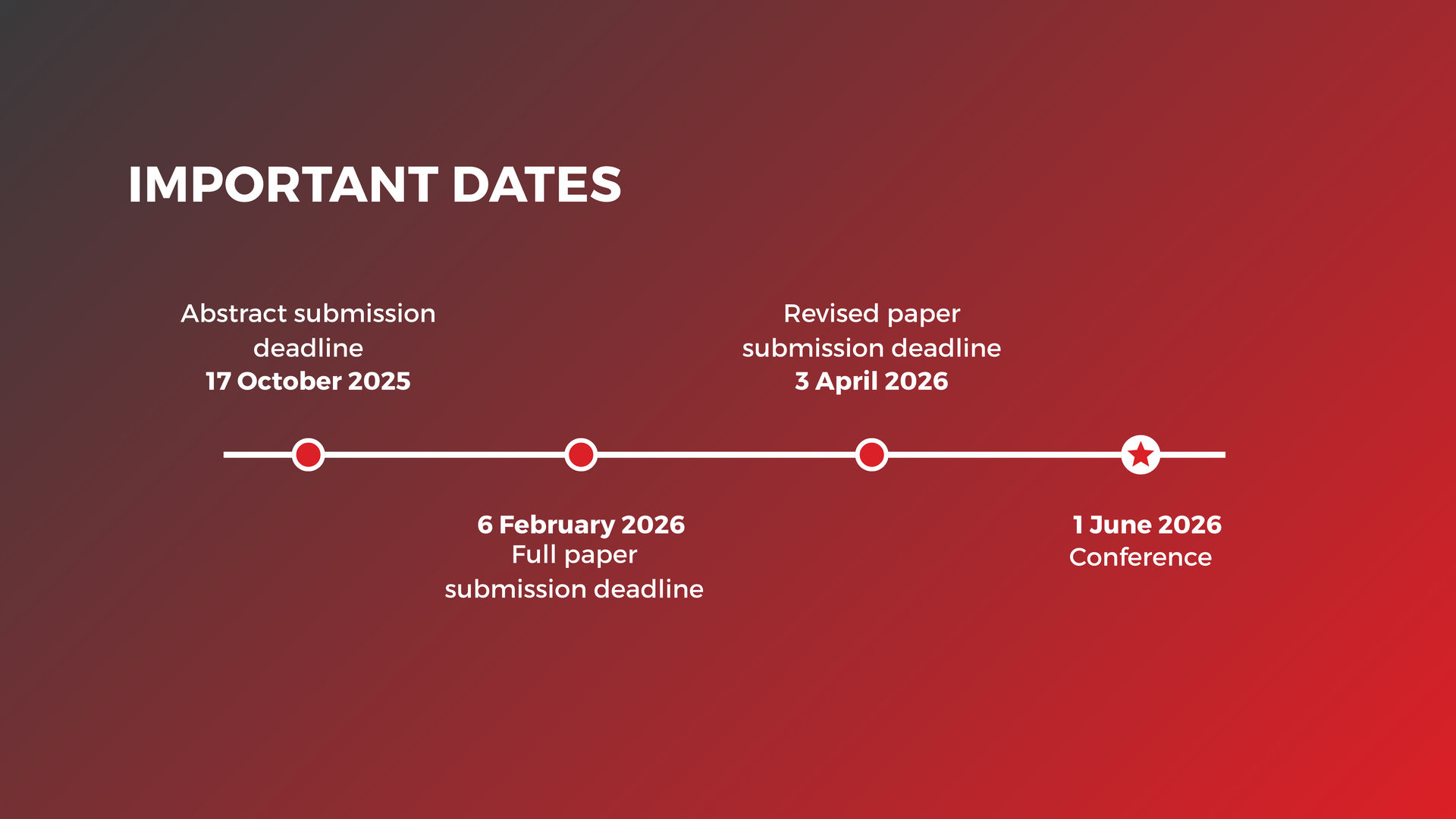
New deadline for abstract submission
We are pleased to announce that the deadline for abstract submission has been extended to the 2nd of November 2025. This gives you additional time to finalize and submit your work.
Please ensure your abstracts are submitted by this date.
ABSTRACT SUBMISSION GUIDELINES
For submission of abstracts, please register in the conference paper submission system and upload your abstract in accordance with the abstractsubmission guidelines:
Abstract text: maximum 400 words
Language: English
The abstract submission must include:
- Title of paper
- Presenting author
- Co-authors
- Affiliations
- Abstract including keywords and references